How to Recover Link Deliverability After a Domain Gets Flagged
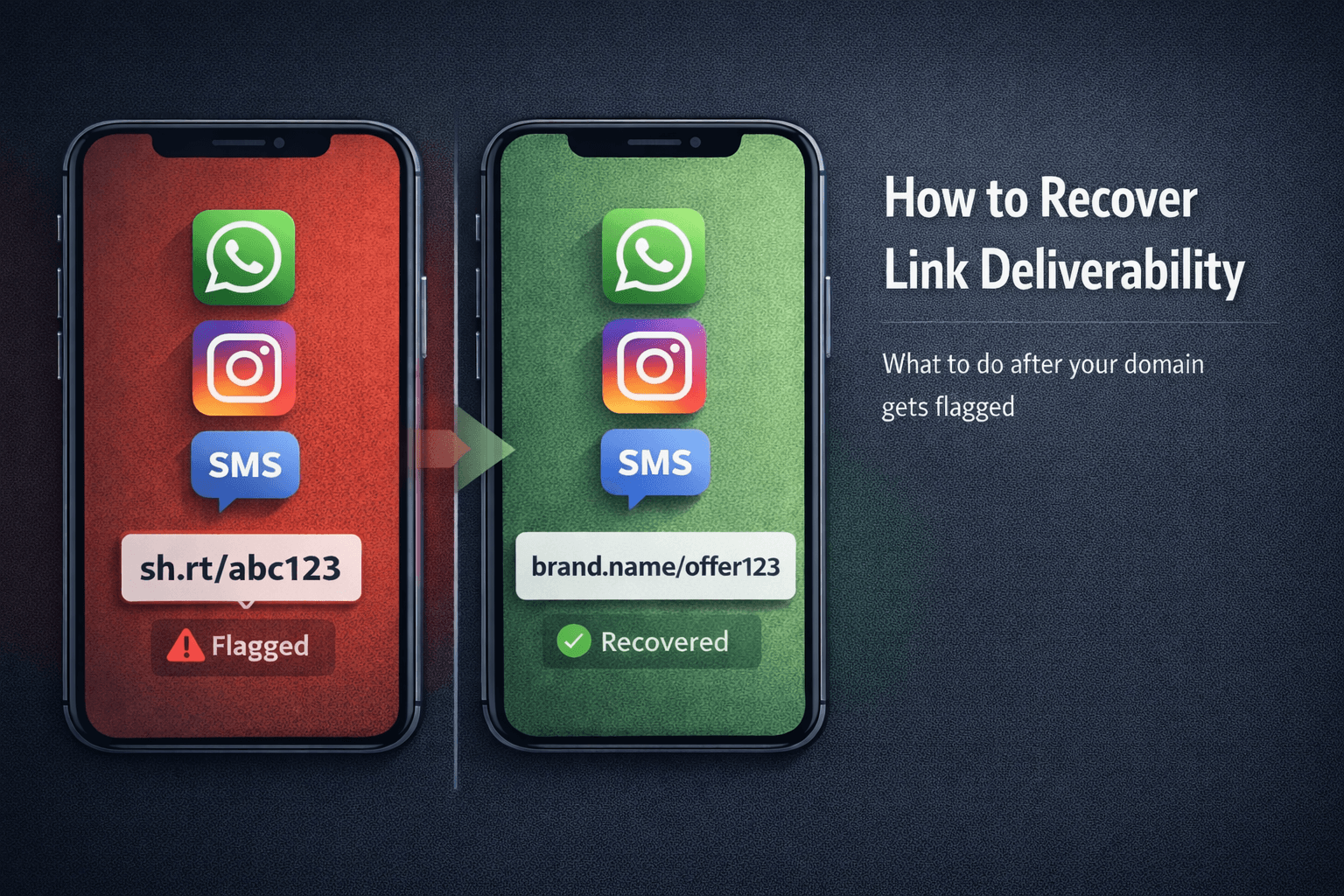
When a short link stops working, most teams make the same mistake:
they change the destination, rewrite the message, or resend the campaign.
That rarely fixes anything.
Once a domain is flagged by WhatsApp, Instagram, or SMS carriers, deliverability does not reset automatically. The damage persists—even if your content is clean.
This guide explains how link reputation actually recovers, what doesn’t work, and how to restore deliverability without making the problem worse.
First: What “Flagged” Really Means
A flagged domain isn’t always fully blocked.
More often, platforms apply progressive trust degradation:
- Messages deliver inconsistently
- Links work in some regions but not others
- Engagement drops without errors
- Warnings appear for some users only
This happens because platforms score domains continuously. Once trust drops, future links are judged more harshly.
Ignoring this stage guarantees a full block later.
Why Most Recovery Attempts Fail
Common reactions that do not work:
- Changing the landing page
- Rotating content or copy
- Waiting it out
- Sending fewer messages
- Switching platforms but keeping the same domain
None of these address the core issue:
the domain itself is no longer trusted.
Until that variable changes, behavior changes don’t matter.
Step 1: Stop Sending Links From the Flagged Domain
This is critical.
Every new message using a damaged domain:
- Reinforces negative reputation
- Trains filters further
- Delays recovery
Pause all campaigns using that domain immediately.
Recovery cannot begin while damage continues.
Step 2: Move to a Clean, Branded Domain
Recovery starts with domain isolation.
A branded domain that you own:
- Has no inherited abuse history
- Is evaluated independently by platforms
- Allows reputation to rebuild from zero
This is why shared short-link domains cannot recover reliably—you cannot separate your behavior from others.
Create new links under a branded domain and do not reuse the flagged one.
Step 3: Use Clean, Transparent Redirects Only
Redirect behavior matters as much as the domain.
Avoid:
- Redirect chains
- Delays
- Conditional routing
- Obfuscated paths
Platforms need to resolve the destination instantly.
Use a single-hop redirect that clearly resolves to a legitimate page over HTTPS.
Step 4: Rebuild Trust Gradually (This Part Is Non-Negotiable)
Reputation recovery is incremental.
Best practices:
- Start with low-volume sharing
- Send only to engaged or known users
- Avoid broadcast or bulk sends initially
- Maintain consistent destinations
Early signals matter more than volume.
One spam-like burst can reset progress.
Step 5: Monitor Behavior, Not Just Clicks
Clicks alone don’t show deliverability health.
Watch for:
- Message delivery consistency
- Regional failures
- Sudden engagement drops
- Platform-specific behavior changes
These are early indicators of reputation problems—long before full blocking occurs.
Where ZipZy Helps in Recovery
ZipZy is built around branded, isolated link infrastructure, which is essential for recovery.
It allows you to:
- Create links on domains you control exclusively
- Avoid shared-domain penalties entirely
- Use clean, direct redirects
- Monitor link activity as trust rebuilds
Recovery isn’t about tricks.
It’s about removing shared risk and rebuilding trust correctly.
A Simple Recovery Test (Before Relaunching Campaigns)
Before sending any large campaign:
- Create a new short link using a branded domain
- Share it manually in the same channel where blocks occurred
- Check whether delivery and clicks behave normally
If the branded link works while the old domain still fails, recovery is in progress.
Do not scale until this test is clean.
Once a domain is flagged, deliverability does not magically return.
Recovery requires:
- Stopping damage
- Isolating reputation
- Using transparent redirects
- Rebuilding trust slowly
Anything else is guessing—and guessing costs traffic.